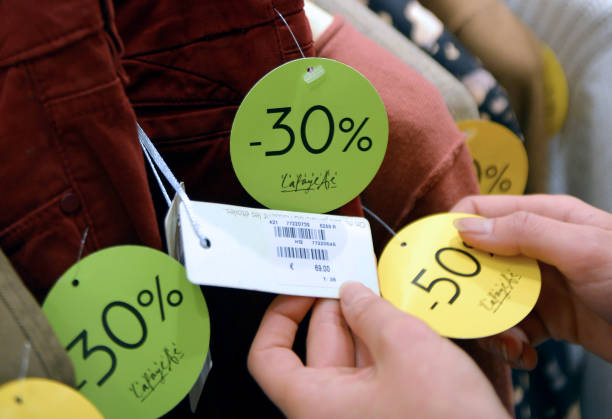
Not every discount is real.
Some just look good.
You see “50% OFF” and think you’re saving money. But sometimes, that number is doing more work than the actual deal.
The illusion of big discounts
Here’s a common trick:
A product is listed at 2,000 birr.
Then “discounted” to 1,200 birr.
Looks like a huge saving.
But in reality?
That product may have always been worth around 1,200.
The “discount” is just a story built around a higher original price.
Why fake discounts work so well
Because your brain focuses on the percentage, not the value.
“50% OFF” feels exciting.
It feels rare.
It feels urgent.
So instead of asking:
👉 “Is this worth it?”
You react to:
👉 “This is a big discount”
And that’s where the mistake happens.
Real discounts are quieter
Genuine deals don’t always look dramatic.
Sometimes it’s:
- A small but meaningful price drop
- A bundle that actually saves money
- A product priced fairly from the start
No huge banners. No pressure.
Just real value.
The easiest way to spot a fake deal
Ask one simple question:
👉 “What is this actually worth?”
Not:
- “How much is the discount?”
- “How big is the percentage?”
But:
- Is this a fair price?
- Have I seen it cheaper elsewhere?
- Would I still buy it without the “sale” label?
If the answer is unclear, pause.
Because confusion often means the deal isn’t as good as it looks.
Compare before you believe
One of the simplest habits that saves money:
Check more than one source.
Not for hours. Just quickly.
Because many “exclusive deals” aren’t exclusive at all.
They’re just presented that way.
Watch out for urgency tricks
Fake discounts often come with pressure:
- “Only today”
- “Last chance”
- “Only 2 left”
These messages are designed to stop you from thinking.
Because when you slow down…
You start questioning the value.
Real deals don’t need pressure
If something is genuinely useful and fairly priced…
You don’t need to be rushed into buying it.
You understand its value naturally.
That’s the difference:
- Fake deals push you
- Real deals make sense
Why most people fall for fake discounts
Because it’s fast.
You see → you react → you buy
There’s no pause. No evaluation.
And without that pause, everything looks like a good deal.
Where Beebirr fits in
Imagine not having to guess:
- Which deals are real
- Which ones are just marketing
- Which ones are actually worth it
Instead, you:
- See clearer options
- Focus on useful offers
- Avoid noise and tricks
That’s how you move from reacting to choosing.
The bottom line
A discount doesn’t automatically mean value.
Sometimes it’s real.
Sometimes it’s just presentation.
The difference is in how you look at it.
👉 Because the smartest shoppers don’t chase the biggest discounts
They look for the real ones